
A shared travel style can bring your RV group together without making anyone uncomfortable on the road. Discover how smart teamwear choices—from practical fabrics and recognizable graphics to personalized details and travel-inspired designs—can turn everyday apparel into something your group will proudly wear wherever adventure leads.
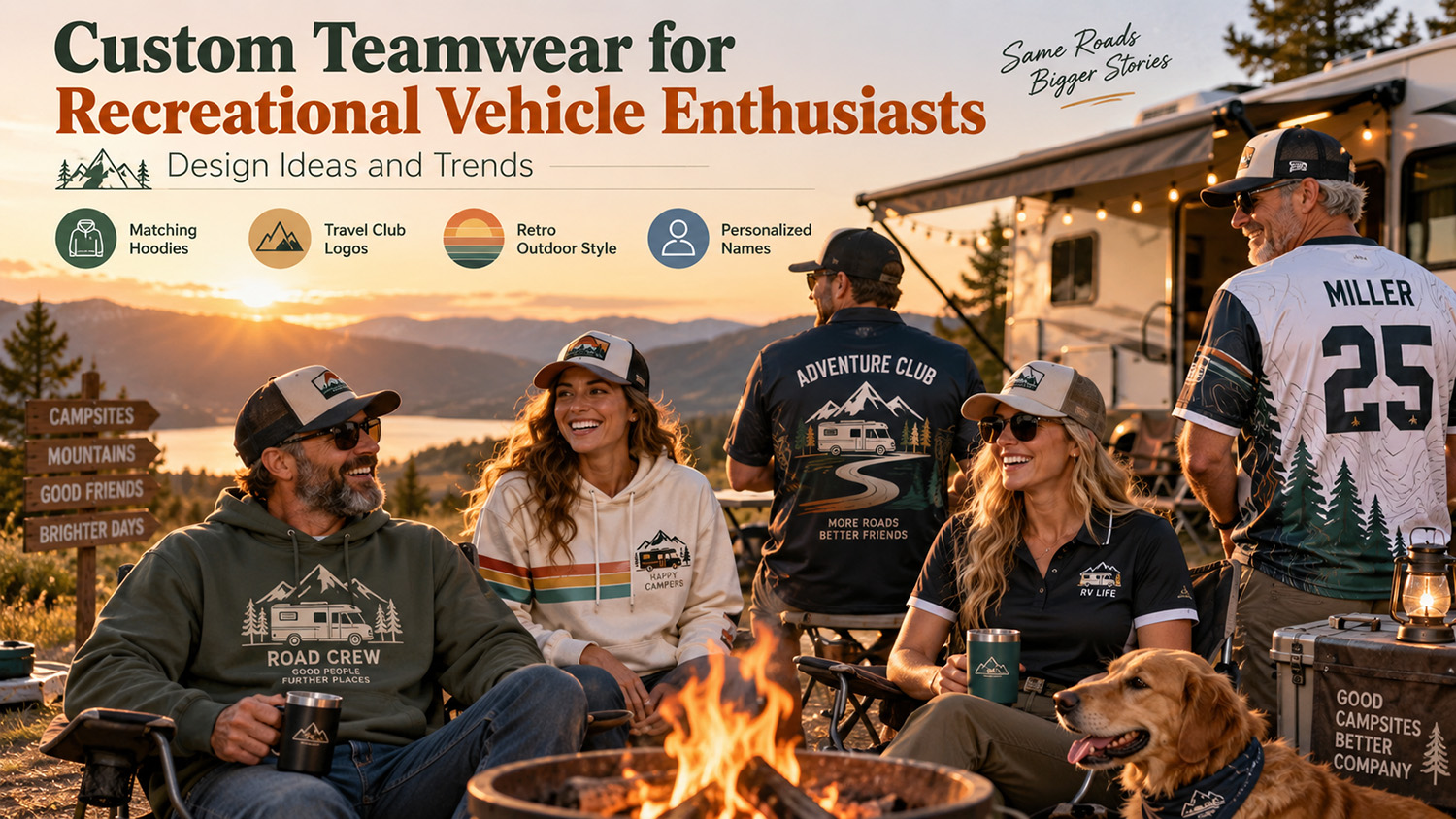
Recreational vehicle travel has always had a strong sense of community behind it. Pull into a campground, attend an RV rally, or spend a weekend traveling with several other rigs, and it does not take long before conversations begin. People compare routes, talk about their vehicles, recommend campsites, share repair stories, and sometimes form friendships that continue for years.
Custom teamwear gives that community another way to show its identity.
For an RV club, caravan group, motorhome association, family travel crew, or group of friends who regularly tour together, matching clothing can be more than a shirt with a logo printed across the front. The same personalization that makes custom sports apparel distinctive can give RV groups a recognizable identity members will actually want to wear beyond a single event.
The challenge is getting the design right. RV enthusiasts need clothing that makes sense during long driving days, campsite setup, outdoor gatherings, changing weather, and the occasional maintenance job around the vehicle. That means appearance matters, but so do comfort, durability, visibility, and practicality.
Designing Teamwear Around the RV Lifestyle
The strongest designs normally begin with the reason the group travels together.
A vintage camper club should not necessarily look like a modern luxury motorhome group. Likewise, an off-grid adventure crew traveling through forests and mountain areas will probably want a different appearance from a group touring coastal campgrounds.
Instead of starting with a generic shirt template, think about what identifies the group.
A Class A motorhome silhouette can create a completely different character from a fifth-wheel, campervan, travel trailer, or vintage caravan. The group’s favorite type of destination can become part of the artwork as well. Mountains, pine trees, desert roads, campfires, lakes, highways, and campsite outlines can provide context without overwhelming the design.
Even a familiar RV experience can inspire an interesting graphic. A winding road disappearing toward mountains with several rigs traveling together immediately communicates group touring. A small campsite illustration containing an awning, chairs, campfire, and RV creates a more relaxed identity.
The point is not to fit every aspect of RV travel onto one shirt. Good teamwear usually communicates one clear idea.
Turning the RV Itself Into Part of the Design
For vehicle enthusiasts, the vehicle is often part of the identity.
That makes the RV one of the most useful design elements available.
A detailed photograph, however, does not always translate well onto clothing. Simplified line drawings, silhouettes, illustrated profiles, and badge-style graphics are generally easier to recognize from a distance.
Groups centered around one particular vehicle style can make that shape the focal point. Imagine a clean side profile of a campervan with the group name curved above it and the year the club was established underneath. It is simple, but it tells you immediately what the group is about.
Owners of particularly distinctive rigs can go a step further and base the artwork on the actual silhouette or recognizable features of their vehicle. The design does not need every mechanical detail. A familiar body shape, front profile, stripe, or other recognizable feature may be enough to make the connection.
Mixed RV groups can take a different approach.
An illustration might contain a motorhome, fifth-wheel, and campervan traveling along the same road. Another option is avoiding specific models entirely and using recognizable travel elements instead.
Personalization can go further for smaller groups. Individual shirts could use the same overall artwork while changing the vehicle name, member nickname, call sign, vehicle number, or home state.
That maintains a unified appearance without making everybody’s garment completely identical.
Choosing Colors That Work Beyond the Rally
One mistake with custom teamwear is designing entirely around an event.
Bright colors and enormous graphics may attract attention during a rally, but ask another question: will members wear the shirt six months later?
Wearability matters.
Earth tones, charcoal, navy, sand, olive, muted blue, gray, and similar colors naturally fit an outdoor and travel environment. They are also forgiving around campsites, where dust, dirt, cooking, vehicle maintenance, and outdoor activities are normal parts of the day.
Another option is to take one or two recognizable colors from the RV itself. A motorhome with charcoal bodywork and burgundy graphics, for example, could inspire a charcoal garment with restrained burgundy details. Owners of restored campers might pull colors from original stripes, upholstery, or period graphics.
That does not mean RV teamwear has to look dull.
Color can be introduced through smaller graphic details. A sunset-orange stripe, red vehicle outline, turquoise lake, yellow campfire, or retro multicolor graphic can create personality without making the entire garment excessively bright.
Vintage-inspired palettes are especially appropriate for groups interested in restored campers and older recreational vehicles. Cream, faded red, mustard, muted green, and washed blue can give artwork the appearance of an old campground patch or highway souvenir.
Modern motorhome groups may prefer something cleaner: dark fabric, limited colors, sharp typography, and a simplified vehicle graphic.
The visual style should make sense with the group and its vehicles rather than simply following whatever color happens to be popular that season.
Comfort and Fabric Matter on Long Travel Days
An attractive shirt becomes considerably less appealing after several hours behind the wheel if the material is heavy, stiff, or uncomfortable.
RV clothing needs to account for how people actually travel.
A typical travel day may involve hours of driving followed by setting stabilizers, connecting hookups, unloading chairs, checking tire pressure, cooking outside, walking around a campground, or dealing with a minor maintenance issue before the day is over. Clothing that looks good at a rally still needs to remain comfortable while doing those things.
Breathable fabrics make sense for warmer conditions. Cotton can provide a familiar soft feel, while cotton blends can offer a balance between comfort, shape retention, and easier care. Performance fabrics may suit groups spending considerable time hiking, cycling, fishing, or participating in other outdoor activities.
Fabric weight deserves attention as well. Very heavy cotton can become uncomfortable when temperatures rise or when someone repeatedly moves between an air-conditioned RV and outdoor heat. Extremely lightweight material may be comfortable but should still be durable enough for repeated campsite use.
Fit matters too.
A club containing members of different ages and body types should avoid choosing garments based entirely on how one sample looks. Offering several fits and a realistic size range makes the finished clothing far more useful.
Think about storage as well. RV space is valuable. Clothing that packs easily, resists excessive wrinkling, dries reasonably quickly, and can handle repeated washing has an advantage when people are traveling for weeks rather than weekends.
There is also a practical visibility consideration. RV owners sometimes connect equipment after dark, walk through dim campgrounds, or deal with roadside problems. Groups that frequently travel or work around their vehicles at night could consider a small reflective logo, sleeve detail, or back element. It can add visibility without making the garment look like dedicated safety workwear.
Garment color can serve a practical purpose too. Lighter colors may be more comfortable when members spend long periods outside in strong sunshine, while darker fabrics tend to be more forgiving around dirt and grease during campsite setup or vehicle maintenance.
The right choice ultimately depends on where the group travels and what members actually do once the RV is parked.
Using Route and Destination Graphics
Not every teamwear design needs to revolve around the vehicle.
Sometimes the journey itself tells the better story.
Groups completing a major tour can incorporate the route into their clothing. A simplified map can show the states, regions, or major stops covered during the trip. A long-distance caravan could use a highway shield or route number as the centerpiece.
Destination-specific clothing can also become a record of the experience.
For example, a mountain tour might feature the elevation or coordinates of an important stop. A coastal trip could use an outline of the shoreline. A cross-country journey could show the starting and finishing locations connected by a simple route line.
Groups returning to the same rally or destination each year can retain the main club identity while changing the year, route, or destination. Over time, those shirts can become a visual record of where the group has traveled.
This works particularly well when the teamwear is created for a specific trip rather than the entire organization.
Instead of becoming another generic souvenir, the garment represents something the members actually experienced together.
Keeping Logos and Personalization Under Control
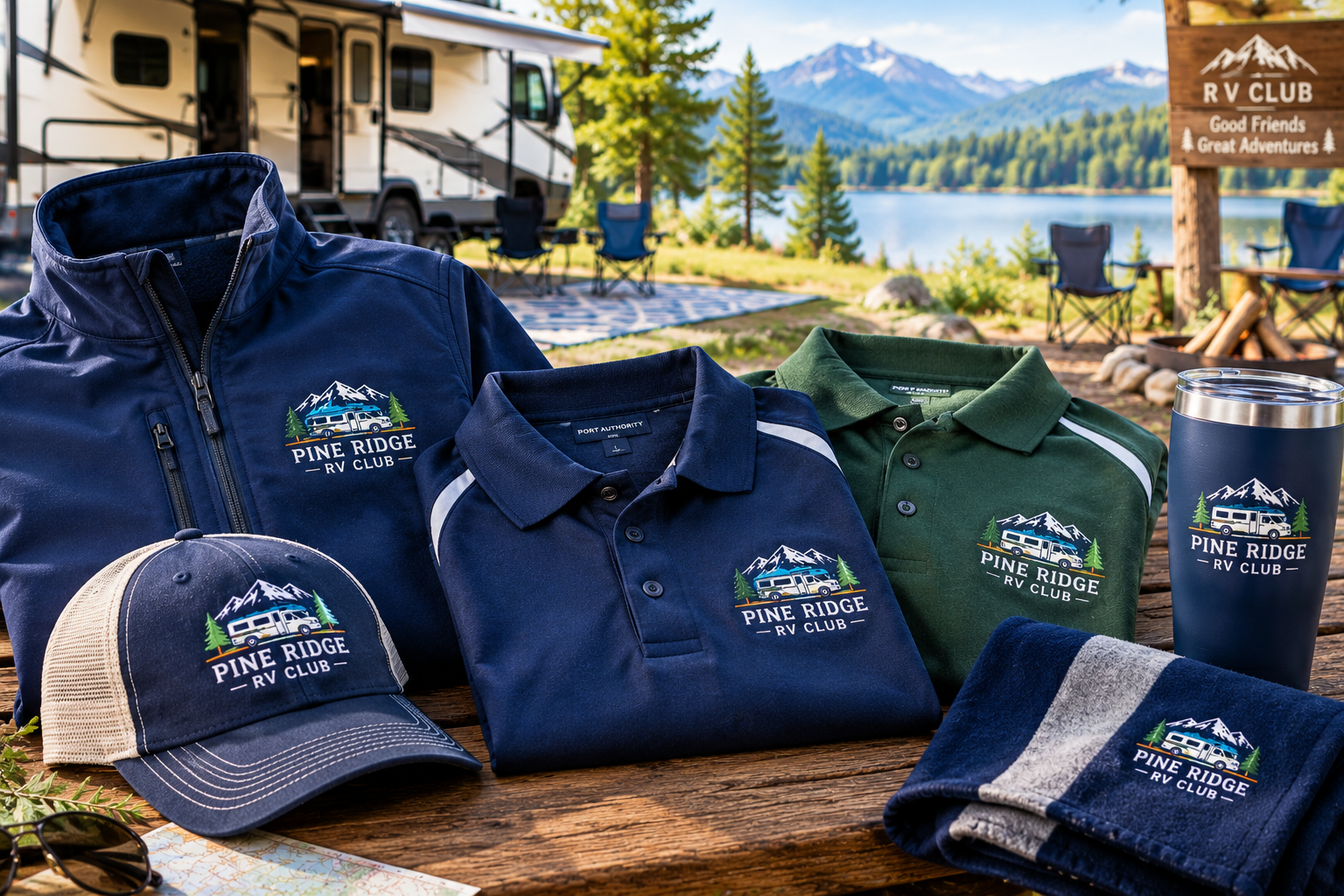
Customization is useful until there is too much of it.
A group name, large logo, slogan, member name, RV model, destination, date, sponsor, social handle, and several decorative graphics may all seem important individually. Put them on one shirt and the design quickly becomes crowded.
Establish a hierarchy.
Decide what somebody should notice first. Usually that will be the group name or primary graphic. Secondary information can be smaller and positioned elsewhere.
A large back graphic paired with a small left-chest mark is a practical arrangement. Names or call signs can be added to a sleeve or chest without competing with the main artwork.
For organized rallies or caravans, personalization can also serve a practical purpose. Labels such as Road Captain, Trip Lead, Tech Crew, or Event Staff can help identify members with particular responsibilities. Vehicle or membership numbers can work in the same way, especially when they correspond with campsite signs or window decals.
Those details should remain secondary to the main group identity. Members should still look like part of the same team rather than a collection of unrelated personalized shirts.
Embroidery also works well for smaller logos, especially on caps, jackets, and polos. Detailed illustrations, gradients, and larger artwork are usually better suited to printing.
The finished garment should still look good even to someone who does not know what every abbreviation or reference means.
Making Teamwear Feel Like Part of the Adventure
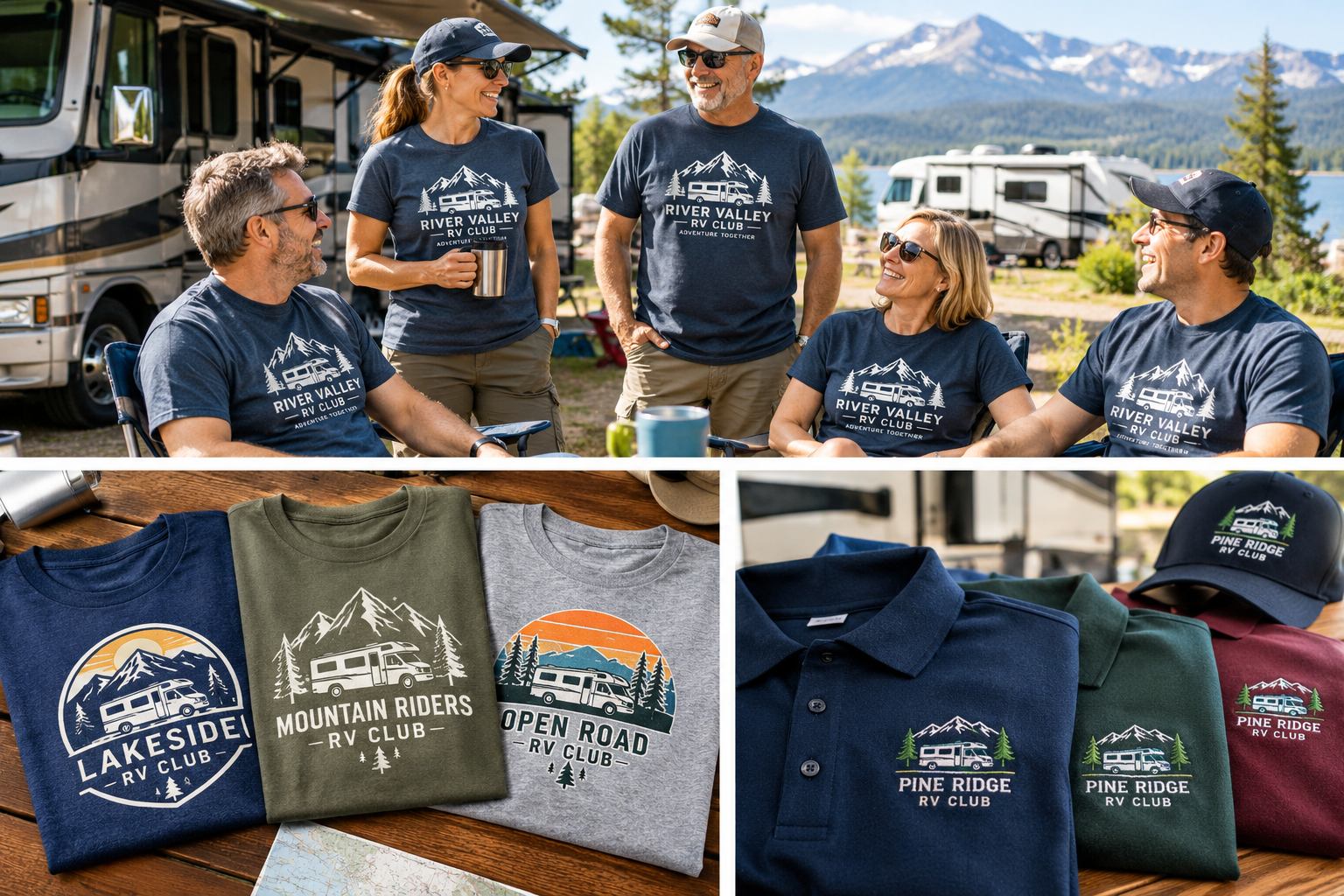
The best custom RV clothing does something ordinary promotional apparel rarely accomplishes: it becomes connected to memories.
A shirt from a first cross-country caravan may eventually remind someone of the campsite where everyone got caught in the rain. A club jacket may bring back years of rallies. A cap embroidered for a particular route can become connected to the places visited along the way.
Even the less glamorous parts of RV travel—setting up after a long drive, fixing something that decided to stop working, sharing tools with another traveler, or sitting around the campsite after everything is finally sorted—can become part of the story behind the clothing.
That is why good RV teamwear should not begin and end with putting a logo on fabric.
Start with the people, vehicles, routes, and experiences that define the group. Build a design around those elements, then choose garments capable of handling the way RV enthusiasts actually travel.
Keep the graphics recognizable. Choose colors people will continue wearing. Make comfort and durability as important as appearance. Consider visibility where it has a practical benefit, and use personalization where it adds meaning rather than simply filling empty space.
Custom teamwear works best when it feels less like a uniform and more like something collected during the journey.
When that happens, members are not wearing matching clothing simply to show that they belong to the same group. They are wearing a small piece of the adventures they have shared—and the ones still waiting farther down the road.